


Today is the first day I’ve had the chance to sit down and reflect on what happened over the past two weeks. I still don’t quite understand how everything unfolded, but somehow my life seems to have turned in a completely different direction.
Two weeks ago I was focused almost entirely on Stone Soup. I was working on packaging, preparing the first teas, and trying to close the last loose ends. Tea had always been the heart of the project, but at that moment my attention was mostly on the mechanics of building the brand around it.
Then Chinese New Year arrived, and during the holiday I sent a message to my tea teacher, to wish her good fortune for the new year. It’s a traditional custom and I didn’t expect much beyond a polite reply. Instead she responded warmly and told me she had been thinking about me. Last year I had attended two short seasons of her weekend classes, maybe six classes in total. After that my schedule became crowded with Stone Soup and travel, and the classes gradually fell away. We stayed loosely in touch, but nothing serious. After exchanging messages we decided to meet at her house on Yangmingshan.
That afternoon Lea and I drove up the mountain. It was one of those rare winter days when the sun appears and everything feels unusually clear. We walked down the stone steps that lead to the garden behind the house, remembering the path from our first visit the year before. When we reached the bottom we saw my teacher sitting on the grass with her eyes closed, sunbathing, and next to her sat a younger woman doing the same. We didn’t want to interrupt, so we wandered around the garden until they finished. Eventually she opened her eyes, noticed us, and greeted us with a huge grin. The younger woman turned out to be one of her students visiting from Kyoto.
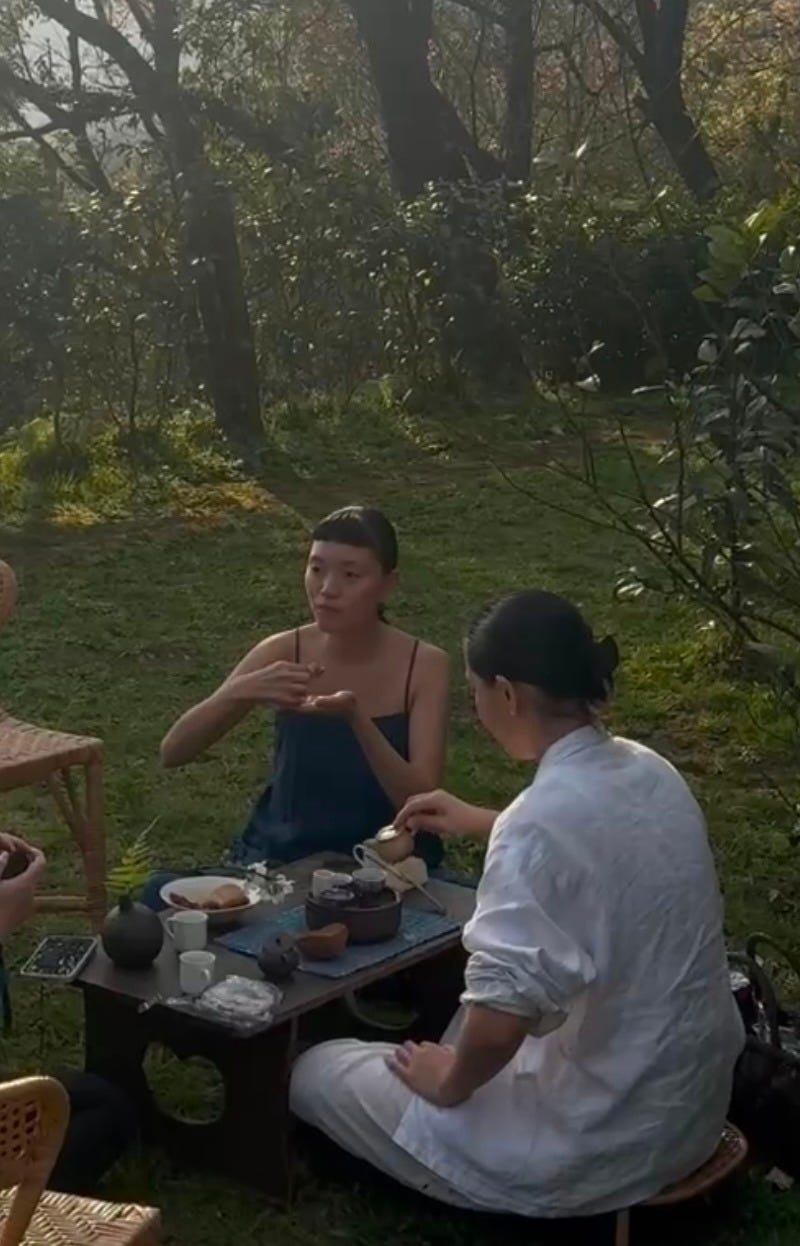
She suggested we brew tea outside, so we carried the tea tables and sets into the garden. Under the winter sun it felt like the perfect place to drink tea. We started talking about life. She told us about the many projects she had going on, which always seems to be the case. Lea shared about her work and about the space we recently opened where people can visit us by appointment. Then she turned to me and asked how I had been.
I had been anticipating that question.
For months I had debated whether I should tell her about Stone Soup. Earlier last year I wasn’t completely certain about my direction, or how committed I truly was to tea, so I had kept that part of my life mostly to myself. But that afternoon I decided to say it.
I told her that I had spent a long time thinking about what I wanted to do with my life and that I had decided to pursue tea seriously. I explained that I hoped to introduce Taiwanese wild tea to people in the United States.
She listened carefully, and then to my surprise she became excited. Instead of questioning the idea she began imagining what might be possible in the future. The conversation stretched through the afternoon, continued during the drive down the mountain, and even carried on when we stopped at a café in Taipei. Somewhere during that long conversation she mentioned that two trainees from Tokyo had come to Taiwan for intensive training. They would soon be working at her new tea house opening in Tokyo. Then she asked if I wanted to join their training.
I said yes immediately.
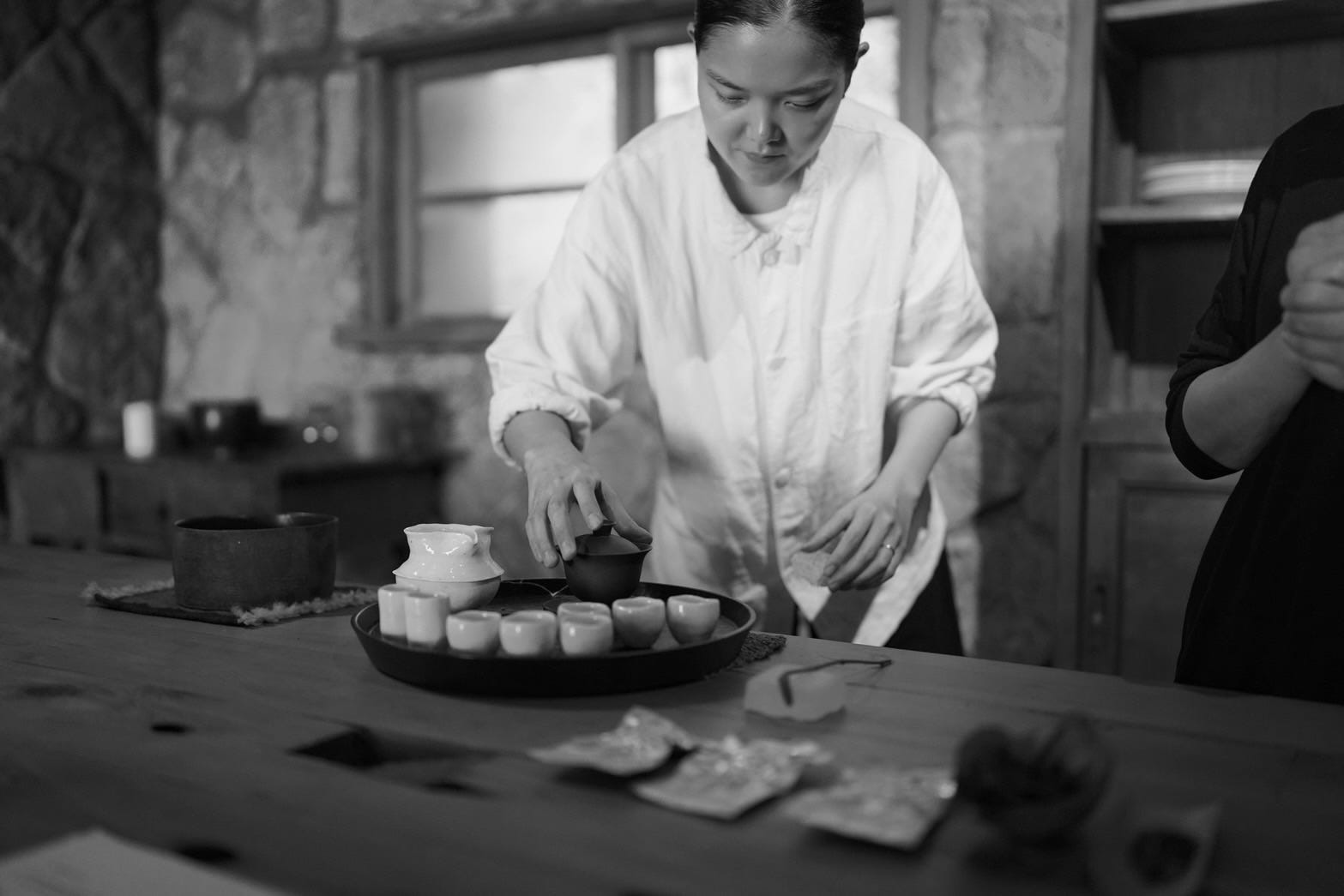
And that was how, quite suddenly, I found myself working inside a tea house.
The funny thing is that last summer, when Lea and I visited tea shops in New York and Paris as part of our research, I told her that I never wanted to run a tea shop. Everyone behind the counter looked bored, which made it seem like the dullest job imaginable.
But once I started working inside a tea house, my perspective changed. All my life I’ve only worked office jobs. I had never waited tables or worked in retail, and sometimes I felt like I had missed out on that experience when I was younger. Now suddenly I was welcoming guests, guiding them through teas, brewing for them, and talking with strangers. And to my surprise, I loved it.
There is something special about a tea house. People who walk through the door already share at least one interest: tea. It becomes a natural way to connect with someone you have never met before.
The learning process, however, has been humbling.
There have been several moments when I accidentally poured too much boiling water into the pot and burned my fingers but still had to continue pouring as if nothing had happened. Whenever that occurs I hear my teacher’s voice in my head saying “yào nài tàng!” You must endure the heat. I suspect that may become my motto for the year.
Other mishaps followed. Once the lid of the teapot slipped and fell directly into a guest’s cup during the pour. Another time I forgot to empty the tea pitcher before starting the next infusion. There was also the day I confidently brought the wrong tea to the table.
I trained alongside two trainees from Japan. We didn’t share a common language. They spoke very little English and I speak no Japanese, but somehow we still became close. Every morning training began at ten, and our teacher examined every movement with incredible attention: how many fingers should hold the lid, how to lift the pot, the angle of the pour. In the afternoons we would serve guests at the tea house until evening.
We ate lunch together every day and often dinner as well. We made mistakes together and laughed about them.
One cultural misunderstanding still makes me smile. During lunch I offered them more rice. When I asked if they wanted more they both said “Ok!” so I happily served large portions. Later my teacher explained that when Japanese people say “Ok!” in that situation, it often means no. That explained the slightly alarmed expressions as they politely forced themselves to finish the rice I had served.
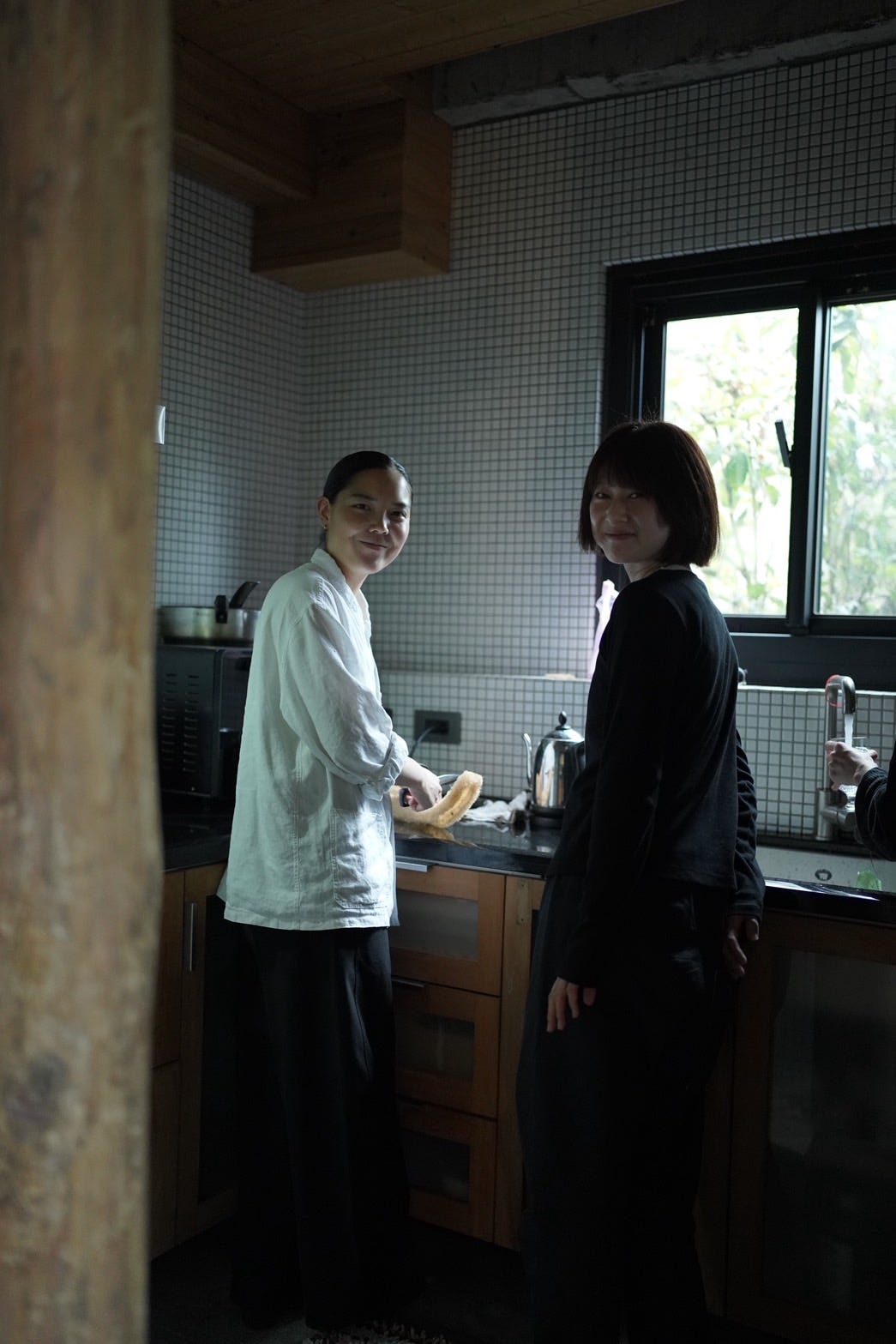
Despite the language barrier, we looked after each other. When someone seemed like they hadn’t had enough water during a busy afternoon, another person would pour them a glass. We would compete to wash the dishes so the others wouldn’t have to. On the last day, one of them gave me a book about tea and flowers as a gift. It’s entirely in Japanese, so I can’t read it yet, but the gesture meant a lot.
Of course, there were difficult moments too.
The most difficult moment happened near the end of training when two of my teacher’s friends came into the tea house shortly before closing. I assumed they had come to visit her, but they sat down and said they were there for tea. We had met before, so I joked with them while bringing out the tea set and menu. They ordered a wild high mountain oolong and I told them I would brew the first infusion while they could brew the rest themselves. Before starting I mentioned that I welcomed feedback since I was still learning.
They took that invitation very seriously.
Every step I made came with commentary.
You should sit on this side of the table. You’re pouring too fast. You took too long opening the lid. The cups aren’t hot enough. Move the water bowl to the side.
They weren’t being unkind. They were simply observing and giving feedback. Still, by the end of the session I felt painfully incompetent. Weeks of training and I was still making basic mistakes. For a moment I wanted to blame the teapot, the water temperature, even the tea leaves, but the truth was obvious. The problem was me.
Then I reminded myself that weeks of training is nothing. If I truly want to do this, what I need isn’t just weeks of practice but a thousand times more.
For now I’m simply grateful that the door opened, and I intend to keep walking through it.
thank you for sharing your recent path. i am reminded about the metaphor of success/failure as signposts pointing to the next direction. the success of your teacher's friendly offer gives a chance to grow more aligned with tea; the failures honing your next right action and deepening your appreciation for a vibrant living culture.
here in New York, i am finding success in my own artisanal work, learning from unexpected failures.
wishing you ease and comfort as you continue journeying deeper into the wild.